Key takeaways
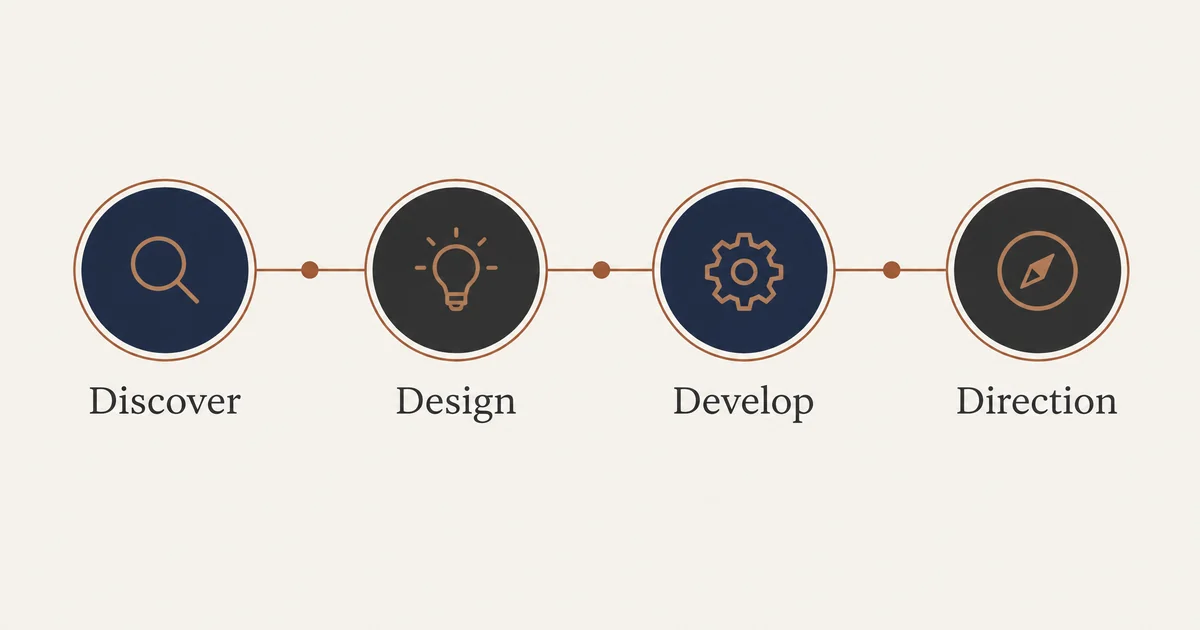
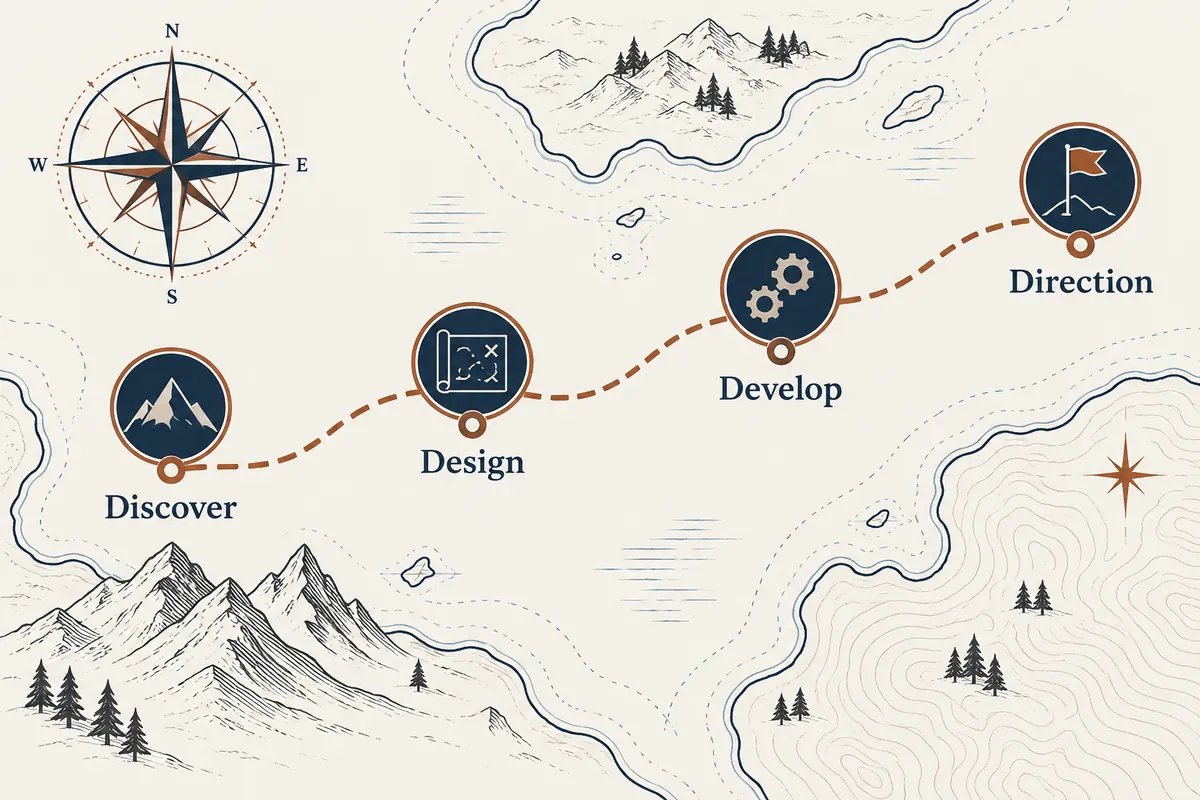
- The 4D Career Blueprint™ organizes career planning into Discover, Design, Develop, and Direction.
- A practical career framework helps professionals move from uncertainty to informed action.
- Career clarity begins before action, with a clear understanding of strengths, values, context, and direction.
Career planning can feel overwhelming when the world of work is changing.
There is too much information. Too many opinions. Too many predictions. Too many people telling you to move faster, learn more, and reinvent yourself.
But good career planning does not begin with panic.
It begins with clarity.
The 4D Career Blueprint is a practical framework created to help professionals rethink their careers in a structured way. It is designed for real people making real decisions at different stages of life.
Students and new graduates can use it to choose a stronger starting direction.
Mid-career professionals can use it to review where they are and what needs to change.
Experienced professionals and leaders can use it to define their next chapter.
Career changers can use it to build a bridge from one path to another.
The four stages are Discover, Design, Develop, and Direction.
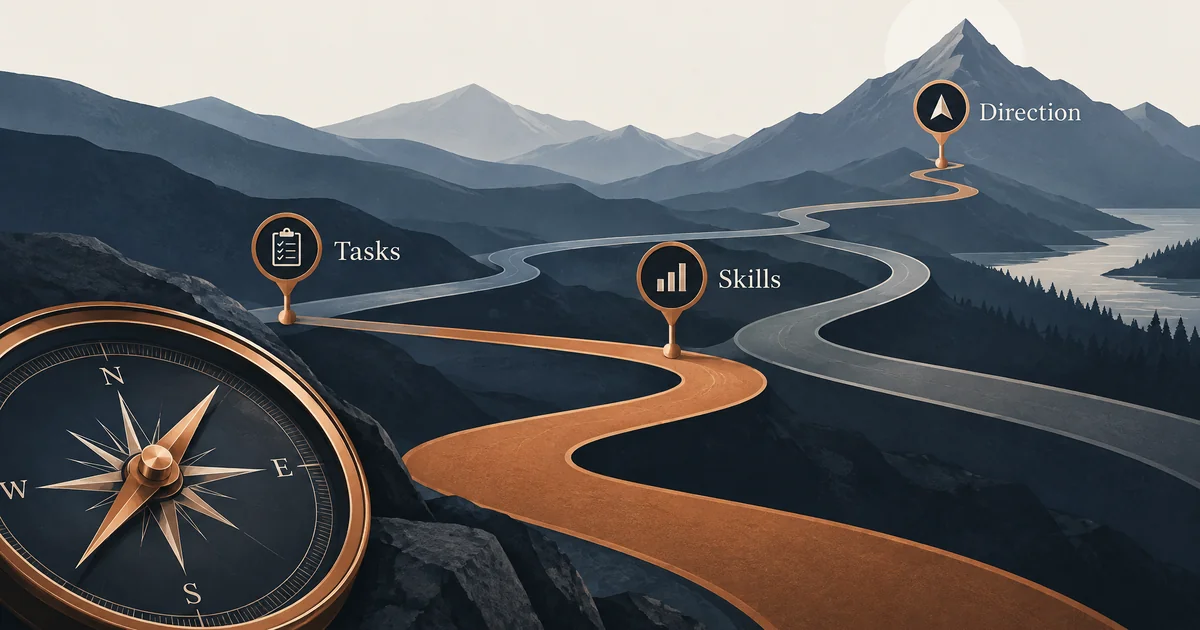
Together, they form a career map for the AI era.
Why a blueprint matters
Many career decisions are made under pressure.
A job ends. A workplace changes. A person feels stuck. A new technology arrives. A younger colleague seems to be moving faster. A role that once felt secure now feels uncertain.
Pressure can push people into rushed decisions.
They apply for jobs they do not want. They sign up for courses they do not need. They stay in roles that drain them. They change direction without understanding why.
A blueprint slows the process down in the right way.
It gives you a sequence.
First, understand yourself.
Then explore your options.
Then build what is missing.
Then choose your next direction.
This is not about making career planning complicated. It is about making it clearer.
Stage 1: Discover
Discover is the starting point.
This stage helps you understand where you are now.
It includes your strengths, experience, values, interests, work patterns, responsibilities, and concerns. It also includes the realities of your life. Time, energy, family, finances, location, confidence, and health can all affect career decisions.
Many people skip this stage.
They jump straight to job titles or training options.
That creates problems.
If you do not know what you are trying to protect, build, or change, it is hard to choose wisely.
Discover asks questions such as:
- What work gives me energy?
- What work drains me?
- What skills do I use well?
- What do people trust me with?
- What values matter in my next role?
- What do I need my career to support at this stage of life?
- What has changed in my industry or profession?
This stage is especially important in the AI era because many people are reacting to outside noise. Discover brings the focus back to the person.
Your career is not only about what the market wants.
It is also about what fits you.
Stage 2: Design
Design is where you begin shaping possible paths.
This does not mean choosing the perfect career immediately. It means exploring options with care.
A good design stage looks at what is realistic, meaningful, and timely.
For example, a mid-career professional may consider three paths:
- Grow in the current field
- Move into an adjacent role
- Prepare for a larger career change
A student may compare fields of study, entry-level roles, and early skills to build.
An experienced leader may explore consulting, advisory work, teaching, board roles, or a different leadership setting.
A career changer may look for overlap between past experience and future opportunity.
Design asks:
- What paths are available to me?
- What roles fit my strengths and values?
- What industries are changing in ways that create opportunity?
- What would each path require?
- What risks and trade-offs come with each option?
- Which path feels both realistic and worth pursuing?
This stage turns uncertainty into options.
Options are useful because they reduce the feeling of being trapped.
You may not know the final answer yet. But you can begin to see possible routes on the map.
Stage 3: Develop
Develop is where planning becomes preparation.
Once you have a clearer path, you can identify what needs to be strengthened.
This may include skills, confidence, credentials, relationships, experience, or career materials.
In the AI era, development does not always mean technical training.
For some people, it may mean learning practical AI fluency. For others, it may mean improving communication, leadership, problem-solving, or industry knowledge. For others, it may mean updating a resume, LinkedIn profile, portfolio, or interview examples.
Develop asks:
- What skills do I need for my next step?
- What evidence do I have that I can do the work?
- What gaps are real, and which ones am I only imagining?
- What learning would be useful now?
- What career materials need to be updated?
- Who should I speak with or learn from?
This stage keeps development focused.
Many professionals waste time learning broadly because they are unsure what they are aiming for. The Develop stage helps you choose learning that supports a direction.
It also helps you avoid overbuilding.
You do not need every certificate. You need the right next capability.
Stage 4: Direction
Direction turns insight into movement.
A career plan is only useful if it leads to action.
This stage helps you decide what comes next and how you will follow through.
Direction may include:
- A 30-day action plan
- A learning schedule
- A job search plan
- Networking conversations
- Resume and profile updates
- Interview preparation
- A transition timeline
- Decision points to review progress
The purpose is not to plan your whole life.
The purpose is to identify the next clear step.
Direction asks:
- What is my next move?
- What will I do first?
- What support do I need?
- What timeline is realistic?
- How will I know I am making progress?
- When will I review and adjust?
This stage matters because career clarity can fade if it is not connected to action.
A map is helpful, but only if you start moving.
How the 4D Career Blueprint helps different career stages
The same framework can support different people in different ways.
For students and new graduates, it creates a thoughtful starting point. Instead of choosing based only on grades, family pressure, or what sounds stable, they can explore strengths, interests, and future skills.
For mid-career professionals, it provides a way to pause and reassess. Many people at this stage have experience, but not always direction. The 4D process helps them decide whether to grow, pivot, or redesign their current path.
For experienced professionals and leaders, it helps clarify the next chapter. Leadership roles, advisory work, entrepreneurship, mentoring, teaching, and board opportunities may all be possible. The framework helps sort them.
For career changers, it creates a bridge. It helps identify transferable skills and plan a realistic transition instead of making a sudden leap without preparation.
Different stages. Same need.
Clearer direction.
Why this matters in the AI era
AI is changing the way many people think about work.
Some tasks are becoming faster. Some skills are becoming more important. Some roles are being redesigned. Some people are being asked to use tools they do not fully understand.
This can create confusion.
The 4D Career Blueprint helps by separating the noise from the next step.
It does not ask you to predict the entire future.
It asks you to understand yourself, explore options, build what matters, and move with direction.
That is practical career planning.
It is also more sustainable than reacting to every headline.
A career map, not a script
The 4D Career Blueprint is not a rigid formula.
It is a map.
Sometimes you may move through all four stages in order. Other times you may return to Discover after learning something new. You may redesign your path. You may develop a skill and then adjust your direction.
That is normal.
Careers are not straight lines for most people.
A good framework gives you enough structure to move, and enough flexibility to adapt.
That is the real value of the 4D Career Blueprint.
It helps you stop guessing.
It helps you make sense of change.
It helps you move forward with clarity.
No career left to chance.