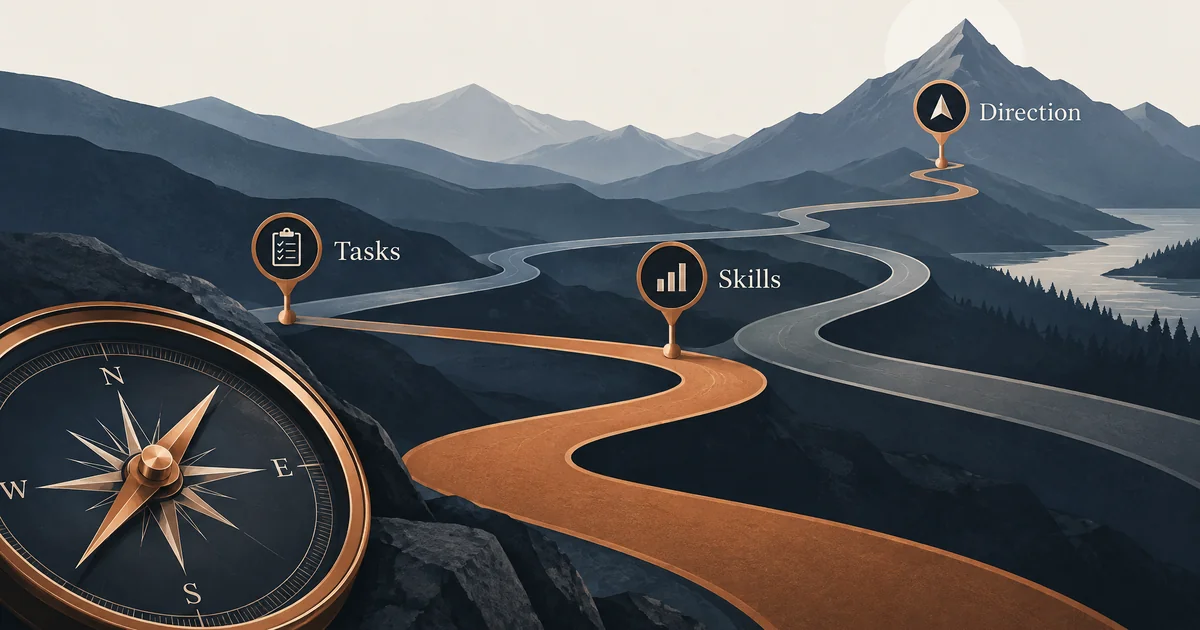
Key takeaways
- AI changes career planning by making task-level awareness more important than job titles alone.
- Mid-career professionals can stay relevant by translating existing experience into the next version of work.
- Selective learning is essential for mid-career professionals because time, responsibility, and career goals must shape the learning plan.
Mid-career can be one of the most important points in a person's working life.
You have experience. You have responsibilities. You may have a reputation, a family, a mortgage, a leadership role, or a professional identity you have built over many years.
You may also have questions you did not expect to be asking.
Is my role changing?
Are my skills still current?
Should I stay, move, lead, retrain, consult, or change direction?
What does AI mean for someone at my stage?
These are serious questions.
They deserve practical answers.
AI is changing career planning for mid-career professionals, but not in the simplistic way many headlines suggest. It is not only about jobs disappearing. It is about tasks changing, expectations shifting, and professionals needing a clearer way to make decisions.
Mid-career professionals are not starting from zero
The first thing to remember is this.
Mid-career professionals are not beginners.
You bring judgment, context, industry knowledge, relationships, communication skills, and experience solving real problems. Those things matter.
AI may change how work is done, but it does not erase the value of professional maturity.
In fact, experience can become more valuable when the workplace becomes more complex.
Someone still needs to understand clients. Someone still needs to lead teams. Someone still needs to manage risk. Someone still needs to make decisions when the data is incomplete or the situation is sensitive.
That is often where mid-career professionals are strongest.
The challenge is not to discard your experience.
The challenge is to translate it into the next version of work.
Career planning now requires task awareness
In the past, career planning often focused on job titles.
What job do I want next?
What promotion should I pursue?
What field should I enter?
Those questions still matter, but they are not enough.
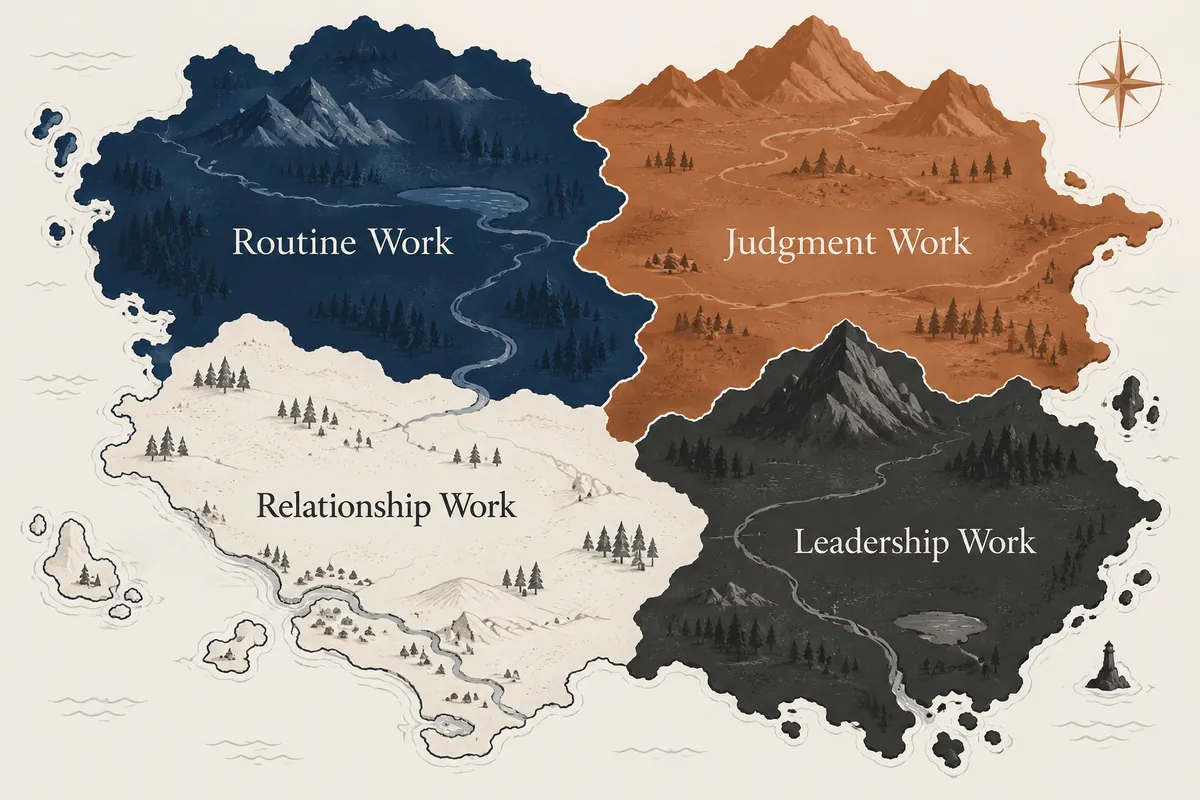
AI affects tasks within jobs, not only job titles.
Two people with the same title may have very different exposure to change depending on what they actually do each day.
A communications manager who writes routine updates all day may be affected differently from one who handles crisis communication and executive counsel.
An accountant doing repetitive data entry may be affected differently from one providing business interpretation and advice.
A manager who only passes information along may be affected differently from one who coaches, prioritizes, and makes decisions.
This means mid-career planning needs a closer look at the work itself.
Ask:
- What tasks do I do often?
- Which tasks are repetitive?
- Which require judgment?
- Which require trust or relationship-building?
- Which require accountability?
- Which could be supported by AI tools?
- Which should remain human-led?
This task-level view gives a more accurate picture than job titles alone.
Learning needs to become more selective
Many mid-career professionals feel pressure to learn quickly.
That pressure can lead to random learning.
A course here. A webinar there. A certificate because someone recommended it. A tool because it is popular.
This can create activity without direction.
Mid-career professionals usually do not have unlimited time. Learning must be selective.
The goal is not to learn everything about AI.
The goal is to learn what helps you stay effective, credible, and ready for your next step.
That may include:
- Understanding how AI is being used in your industry
- Learning how to use common workplace tools responsibly
- Improving your ability to evaluate information
- Strengthening leadership and communication skills
- Learning how to guide teams through change
- Updating your professional profile
- Building confidence in career conversations
The right learning depends on your direction.
A mid-career nurse, teacher, project manager, HR professional, business owner, engineer, and nonprofit leader do not need the same learning plan.
They need a plan that fits their work and goals.
Career risk is becoming more personal
AI does not affect all professionals in the same way.
Your risk depends on several factors:
- Your industry
- Your role
- Your tasks
- Your employer
- Your adaptability
- Your network
- Your learning habits
- Your willingness to reposition
This is why generic advice can be unhelpful.
Telling everyone to "learn AI" is too vague.
Telling everyone to change careers is too extreme.
Telling everyone not to worry is unrealistic.
Mid-career professionals need a more personal assessment.
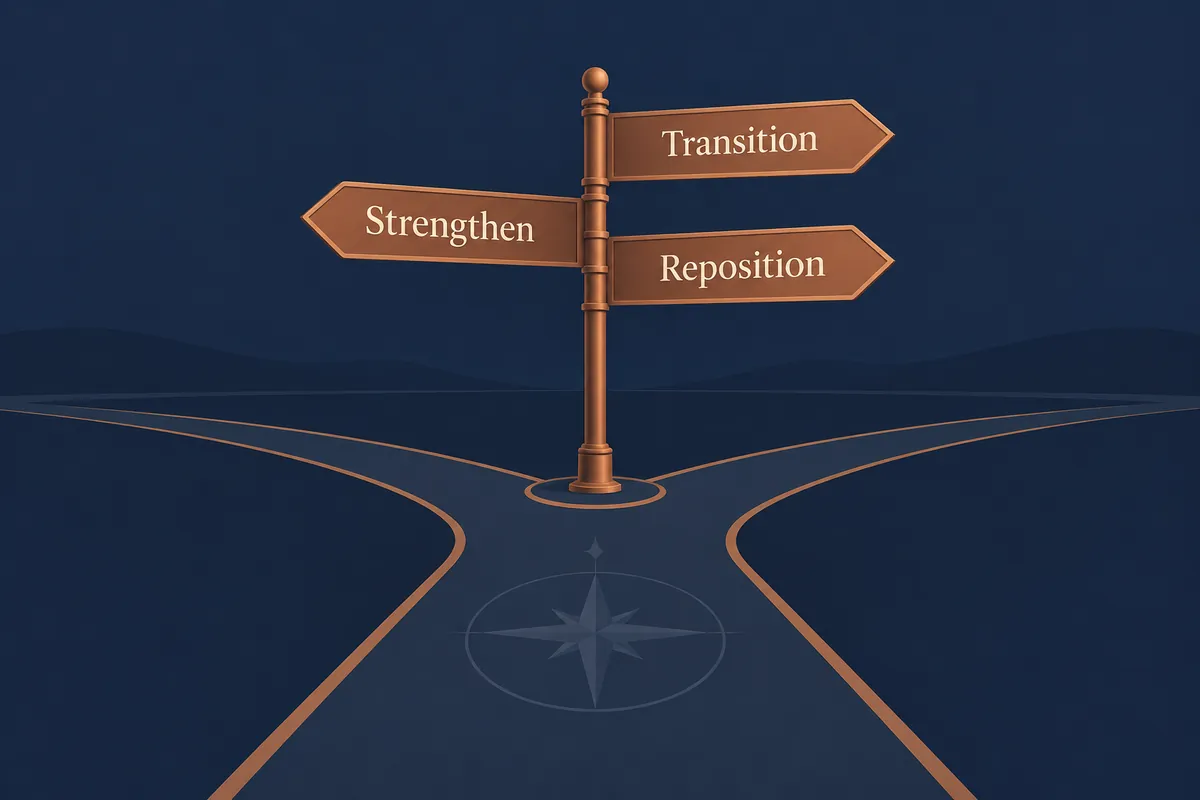
For some, the best move is to strengthen their current role.
For others, it is to move into a related role with better future fit.
For others, it may be time to plan a career change.
The key is to assess honestly before deciding.
The job search is changing too
AI is also changing how people search for work.
Job seekers can use tools to improve resumes, prepare for interviews, research companies, and understand job descriptions. Employers may also use technology in screening, scheduling, and assessment.
This creates both opportunity and responsibility.
A stronger job search today requires more than sending out the same resume many times.
Mid-career professionals need to show the value of their experience clearly.
That means:
- Translating past work into current language
- Showing results, not only responsibilities
- Explaining transferable skills
- Addressing career changes with confidence
- Preparing examples that show judgment and adaptability
- Making LinkedIn profiles clearer and more current
AI can help with drafts and preparation, but it cannot replace your story.
Your career materials still need to sound like you.
They need to reflect real experience.
They need to be accurate.
Mid-career identity may need to shift
Career planning is not only practical. It is also emotional.
Many mid-career professionals have a strong identity tied to their field, title, or expertise. When work changes, that identity can feel threatened.
This is one reason people delay career planning.
They are not only avoiding a task. They may be avoiding a difficult question.
Who am I if my role changes?
What if the work I trained for is no longer enough?
What if I need to learn from people younger than me?
What if I am not as current as I thought?
These questions are normal.
They should be handled with honesty, not shame.
A strong mid-career plan respects the person behind the resume. It recognizes that change can be both practical and personal.
Leadership expectations are changing
For experienced professionals and leaders, AI changes more than personal productivity.
It changes leadership expectations.
Teams may look to leaders for guidance on how to use tools responsibly. Organizations may need decisions about training, policy, workflow, privacy, and quality. Employees may feel anxious about job security or skill gaps.
Leaders do not need to have every technical answer.
But they do need enough understanding to ask good questions and guide responsible decisions.
They also need to communicate clearly.
People do not follow vague reassurance for long. They need practical direction.
For leaders, career planning may include building AI fluency, change leadership skills, and a stronger point of view about how work should be done.
A practical path for mid-career planning
A practical mid-career plan in the AI era should include four steps.
First, assess your current role at the task level.
Second, identify which skills and strengths remain valuable.
Third, choose a direction: strengthen, reposition, or transition.
Fourth, build a focused development plan.
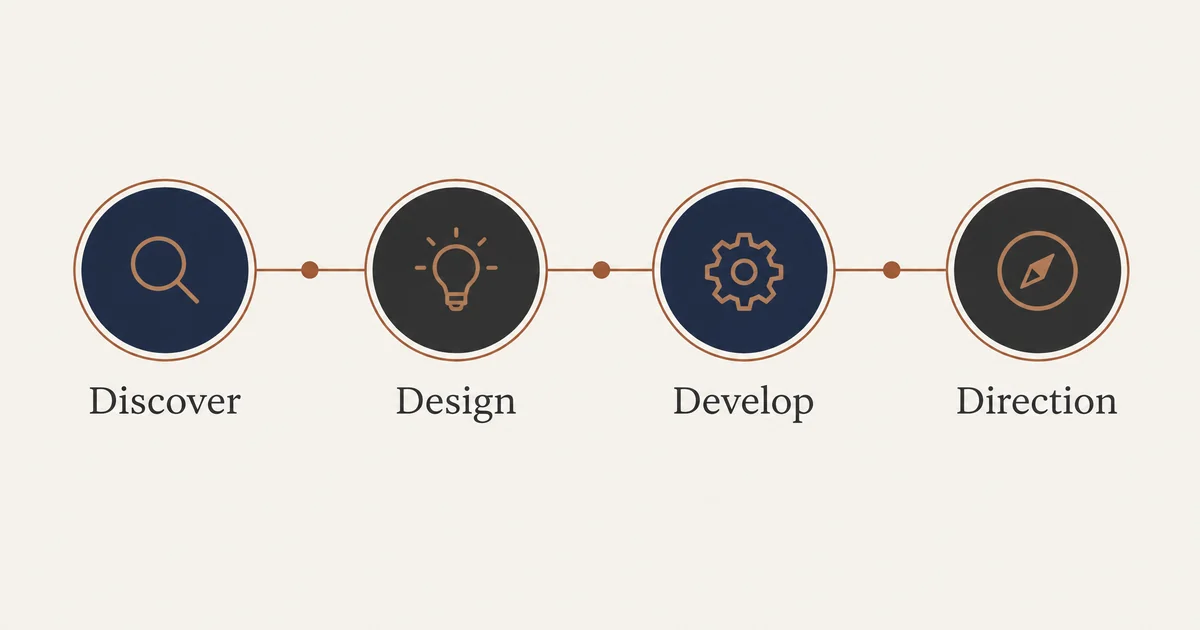
This aligns closely with the 4D Career Blueprint.
Discover where you are.
Design possible paths.
Develop what is needed.
Set Direction for the next move.
The process is simple, but not shallow.
It gives mid-career professionals a way to move forward without panic.
The opportunity for mid-career professionals
AI is changing career planning, but it is not removing the need for experienced people.
If anything, it is increasing the need for people who can combine judgment, communication, adaptability, and responsible use of new tools.
Mid-career professionals have an opportunity to become translators between experience and change.
They can help workplaces use new tools wisely.
They can mentor others.
They can redesign their roles.
They can move into work that better fits the future.
But this requires intention.
A career left unattended can drift.
A career reviewed with honesty can be redirected.
No career left to chance.