
Key takeaways
- AI career advising helps professionals make clearer career decisions by combining self-awareness, labour market awareness, and responsible use of AI-supported tools.
- The purpose of AI career advising is not to replace human judgment, but to help people navigate changing work with more clarity.
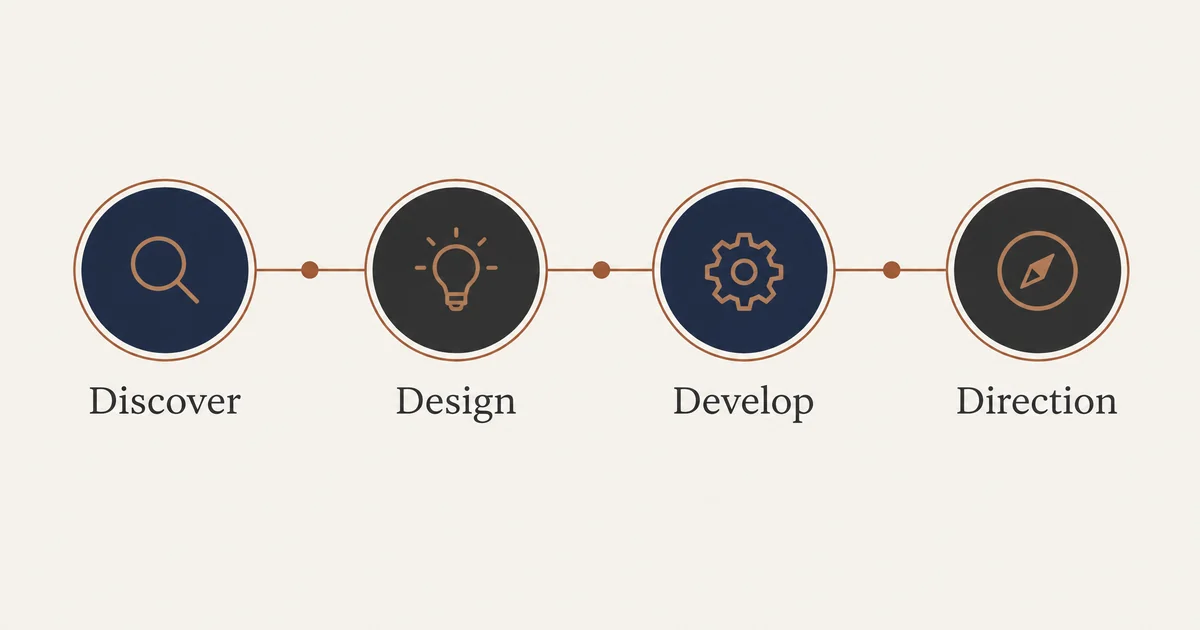
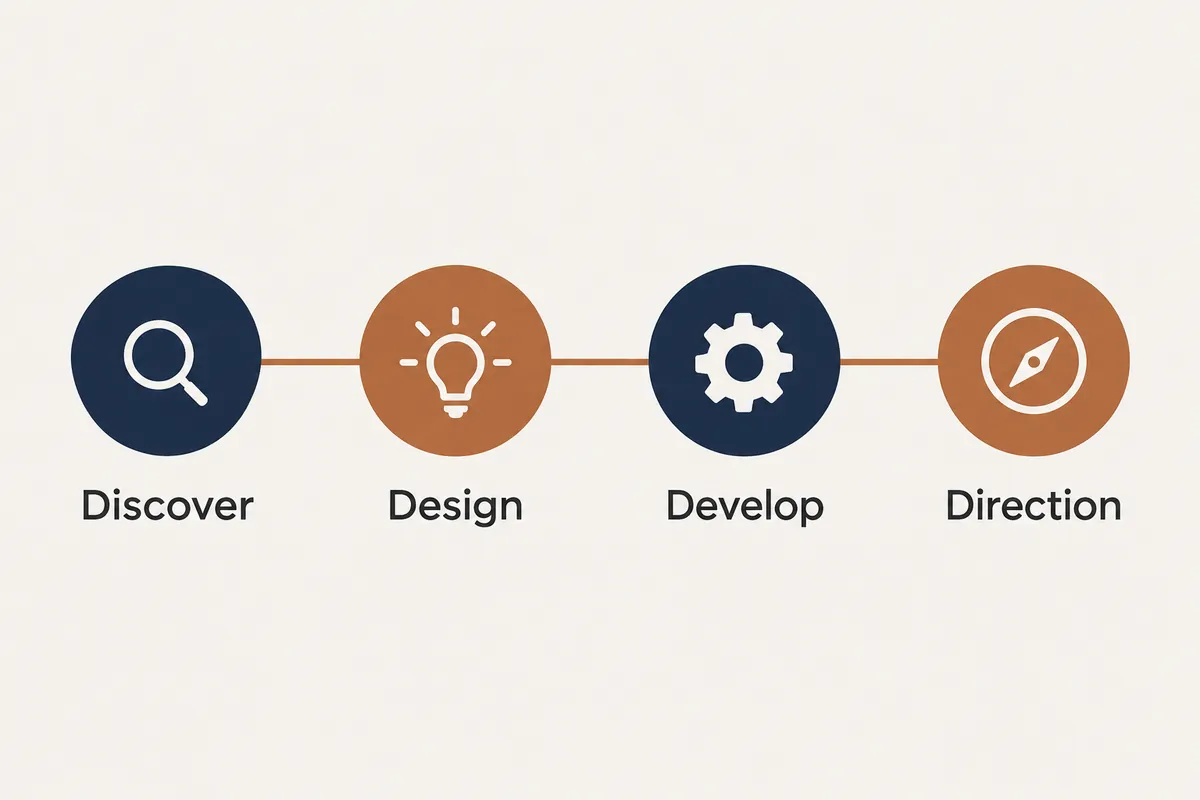
- Agnes Goh's 4D Career Blueprint™ organizes career planning into four practical stages: Discover, Design, Develop, and Direction.
Career planning has always required reflection, research, and good judgment. That has not changed.
What has changed is the speed of the labour market.
Roles are shifting. Job descriptions are changing. Employers are asking for new skills. Professionals are hearing more about AI at work, but many are not sure what it means for their own career.
This is where AI career advising comes in.
AI career advising is not about replacing human judgment with technology. It is about helping people make clearer career decisions in a changing world. It combines career coaching, practical labour market awareness, and responsible use of AI-supported tools to help people understand where they are, where they want to go, and what steps make sense next.
For students, it may mean choosing a direction with more confidence.
For mid-career professionals, it may mean staying relevant without starting over.
For experienced professionals and leaders, it may mean understanding how their skills translate into the next stage of work.
For career changers, it may mean finding a practical bridge from one field to another.
The goal is simple.
No career left to chance.
Why career advising needs to change
Traditional career advice often assumes the path is fairly stable.
Pick a field. Build experience. Move up. Change jobs when needed. Add training along the way.
That model still works for some people, but it is no longer enough for everyone.
The World Economic Forum has reported that many employers expect skills to change significantly in the coming years. Its Future of Jobs research has pointed to analytical thinking, creative thinking, resilience, flexibility, and curiosity as important skills across many sectors. Technical skills matter in some roles, but human judgment and adaptability continue to matter too.
This matters because many people are asking the wrong question.
They ask, "Will AI replace my job?"
A better question is, "How is my work changing, and what do I need to understand so I can make better career decisions?"
AI career advising helps answer that question.
It does not begin with fear. It begins with a clear map.
What AI career advising actually does
AI career advising helps people look at their career from several angles at once.
It may include:
- Clarifying strengths, interests, values, and goals
- Reviewing past experience and transferable skills
- Identifying how roles and industries are changing
- Exploring realistic career options
- Spotting skill gaps
- Building a learning plan
- Improving resumes, profiles, and interview preparation
- Helping people make decisions with more confidence
The important word is advising.
Good advising does not hand someone a generic answer. It helps them think clearly.
AI can support the process by organizing information, comparing options, identifying patterns, and helping people prepare. But the person still matters. Their goals matter. Their life stage matters. Their responsibilities, confidence, preferences, and values matter.
Career decisions are personal. They should not be reduced to a quick list of suggested jobs.

How it differs from traditional career coaching
Traditional career coaching often focuses on self-awareness, confidence, transition planning, job search strategy, and decision-making.
Those are still essential.
AI career advising adds another layer.
It considers how the workplace is being reshaped and helps professionals respond in a grounded way.
That may include questions such as:
- Which parts of my work are becoming easier to automate?
- Which parts still need human judgment?
- What skills are becoming more useful in my field?
- How do I talk about my experience in a changing job market?
- What should I learn next?
- How do I stay relevant without chasing every new tool?
This is not about panic. It is about navigation.
A compass does not walk the road for you. It helps you choose your direction.
AI career advising works the same way.
Who AI career advising is for
AI career advising is not only for people who work in technology.
It is for anyone whose work is being affected by changing tools, expectations, and skills.
Students and new graduates may use it to understand which careers are growing, which skills to build early, and how to enter the workforce with confidence.
Mid-career professionals may use it to assess whether their current path is still right, whether they need to reposition, or whether a career change is realistic.
Experienced professionals and leaders may use it to understand how to lead teams through change, keep their own skills current, and stay valuable in strategic roles.
Career changers may use it to identify transferable skills and choose a practical path forward.
The point is not to turn everyone into a technologist.
The point is to help people understand the new career landscape and move through it with clarity.
What makes AI career advising effective
AI career advising works best when it is practical.
Not theoretical. Not full of jargon. Not based on fear.
A strong advising process should help someone answer four questions:
- What do I know about myself?
- What is changing around me?
- What options are realistic for me?
- What should I do next?
That is why a structured method matters.
The 4D Career Blueprint uses four stages: Discover, Design, Develop, and Direction.
Discover helps you understand your strengths, values, experience, and current situation.
Design helps you explore possible paths and choose one that fits.
Develop helps you build the skills, confidence, and materials needed to move forward.
Direction helps you create a practical next-step plan.
This turns career uncertainty into a clear process.
What AI career advising is not
AI career advising is not a magic answer.
It is not a shortcut that removes the need for effort.
It is not about letting a tool decide your future.
It is not about chasing every trend.
It is not only for young people, technical people, or people in crisis.
It is also not about making dramatic changes when a thoughtful adjustment would do.
Sometimes the right move is a new role.
Sometimes it is a new skill.
Sometimes it is a stronger resume.
Sometimes it is a better understanding of how your current work is changing.
Good advising helps you tell the difference.
Why human judgment still matters
Career decisions affect real lives.
They affect income, identity, family, confidence, time, and future options.
That is why human judgment remains central.
AI can help gather information. It can help organize thoughts. It can help compare paths. It can help prepare documents.
But it cannot fully understand what a career decision means in the context of a person's life.
It cannot know what matters most to you unless you do the work to define it.
It cannot replace courage, honesty, or responsibility.
The best use of AI in career advising is not to remove the human element. It is to support it.
The future of career planning is not less human. It should be more human, because people will need more clarity, not less.
A clearer way forward
AI career advising is a response to a real need.
People want to understand what is changing. They want to know where they fit. They want practical steps. They want less confusion and more direction.
That is the purpose of this work.
To help professionals at every stage gain career clarity in the AI era.
Not through hype.
Not through fear.
Through a clear map, practical guidance, and a steady path forward.
No career left to chance.